
6th Catalan Congress of Mental Health 2017
June 1-3, 2017
Migration, exile, and refuge: human rights and mental health
Memorial: Josep Clusa | Homage to Valentín Barenblint
Cuidar és oferir, a través del vincle, un espai on tornar a sentir que es pertany
The 6th Catalan Congress of Mental Health, held on June 1, 2, and 3, 2017, at CosmoCaixa in Barcelona, focused on migration, exile, and refuge from the perspective of human rights and mental health.
The Congress specifically addressed the refugee crisis in Europe and its consequences for individual and community mental health.
The high burden of suffering associated with migration processes, exile, and situations of helplessness was highlighted.
The meeting vindicated the fraternity, human rights and democratic quality in the approach to the migratory phenomenon.
The need to provide answers was raised collective, coordinated, interdisciplinary, and interinstitutional.
The Congress also wanted to be a space for denunciation and mobilization in the face of situations of rights violations.
The debates were structured around the human rights of migrants, the impact of violence, and comprehensive mental health care.
Among the final proposals, the need to promote reception and coexistence and to combat racism and xenophobia was highlighted.
Attention to the suffering of migrants was also demanded to avoid medicalization of pain and grief processes.
The Congress included the Josep Clusa Memorial a tribute to Valentín Barenblit, two benchmarks in public and community mental health.
Memorial
Josep Clusa | Tribute to Valentín Barenblint
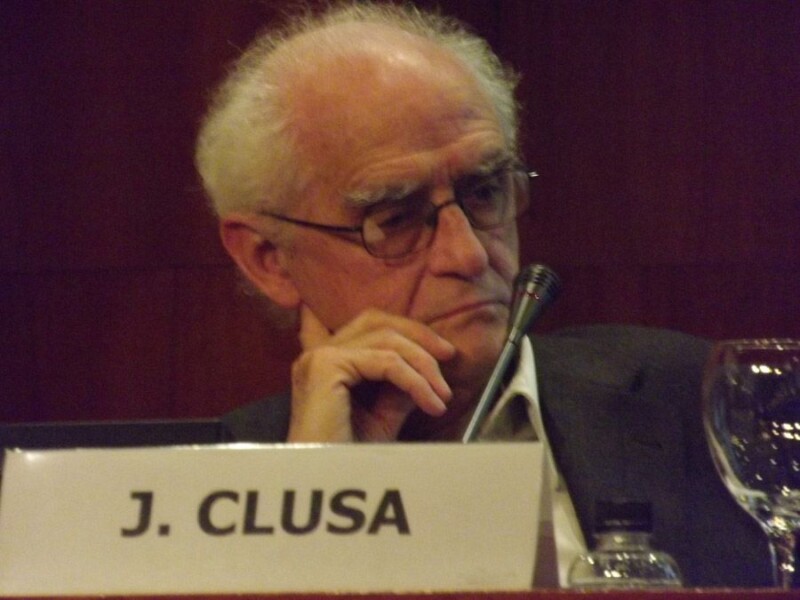
The 6th Josep Clusa Memorial recognized the career and contribution of Josep Clusa to public and community mental health care in Catalonia.
Clusa, psychiatrist and psychoanalyst, was one of the driving forces behind the Catalan Mental Health Congress Foundation, which he presided over between 2005 and 2013.
Her career was closely linked to the Santa Creu Mental Institute, where she participated in the movement to transform and dignify the care provided to inpatients.
During the eighties he led the process of dismantling the old psychiatric hospital and its transformation into community care services.
This process resulted in new resources, such as day centers and assisted living apartments, aimed at closer care to the community.
Clusa defended a humanistic, interdisciplinary, and socially committed conception of mental health.
Throughout his career, he promoted congresses, conferences, courses, and spaces for professional supervision and reflection.
The Memorial brought together professionals, representatives of the Foundation, individuals connected to the Mental Institute, and members of their families.
The speeches highlighted her professional contribution, her commitment to public mental health, and her human dimension.
The 6th Memorial thus became a tribute to one of the leading figures in the transformation of mental health care in Catalonia.
Images from the day


6th Xarxart Painting and Drawing Prize
The 6th Xarxart Painting and Drawing Prize, convened within the framework of the 6th Catalan Mental Health Congress, recognized artistic creation as a space of expression linked to mental health.
The jury highlighted several works for their plastic and conceptual strength and artistic treatment.
Among the selected works were those by Josep Duran «Urco», Lourdes Calvo Alonso, David n'Dongo, Jose de la Vega Oros, and Pilar Ferrer Moles.
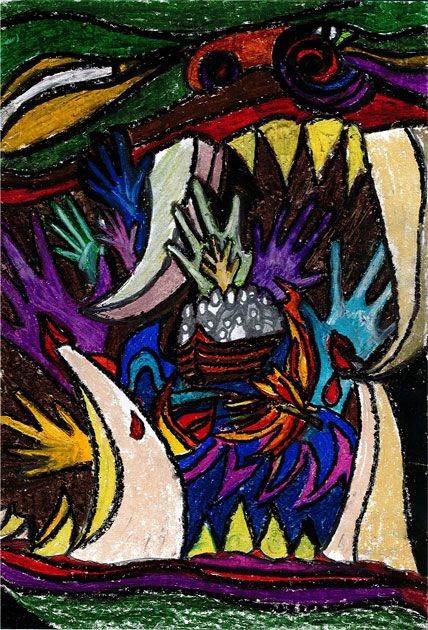
The winning work was that of Cristina Laura Morales Ibáñez, of the ARAPDIS Foundation and Association.
The jury especially highlighted its strength, symbolism and the use of color.
The winning work also highlighted the situation of refugees, in line with the central theme of the 6th Congress.
Sixth Xarxart Award Edition (2017)
First prize
«Untitled»
Cristina Laura Morales

Sixth Xarxart Award Edition (2017)
Finalist
«Action Against Hunger»
David N'Dongo

Sixth Xarxart Award Edition (2017)
Finalist
«Daily life in a refugee camp»
José de la Vega Oros

Sixth Xarxart Award Edition (2017)
Finalist
«Untitled»
Lourdes Calvo Alonso

Sixth Xarxart Award Edition (2017)
Finalist
«Untitled»
Josep Duran "Urco"

Sixth Xarxart Award Edition (2017)
Finalist
«Untitled»
Pilar Ferrer Moles
Resum de continguts
- The Minister of Health of the Generalitat highlights «Catalonia's European exceptionality» in the field of reception.
- The psychiatrist of Syrian origin, Nabil Sayed-Ahmad Beirutí, addresses migration as a phenomenon «inherent to human nature with many positive aspects.»
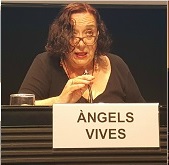
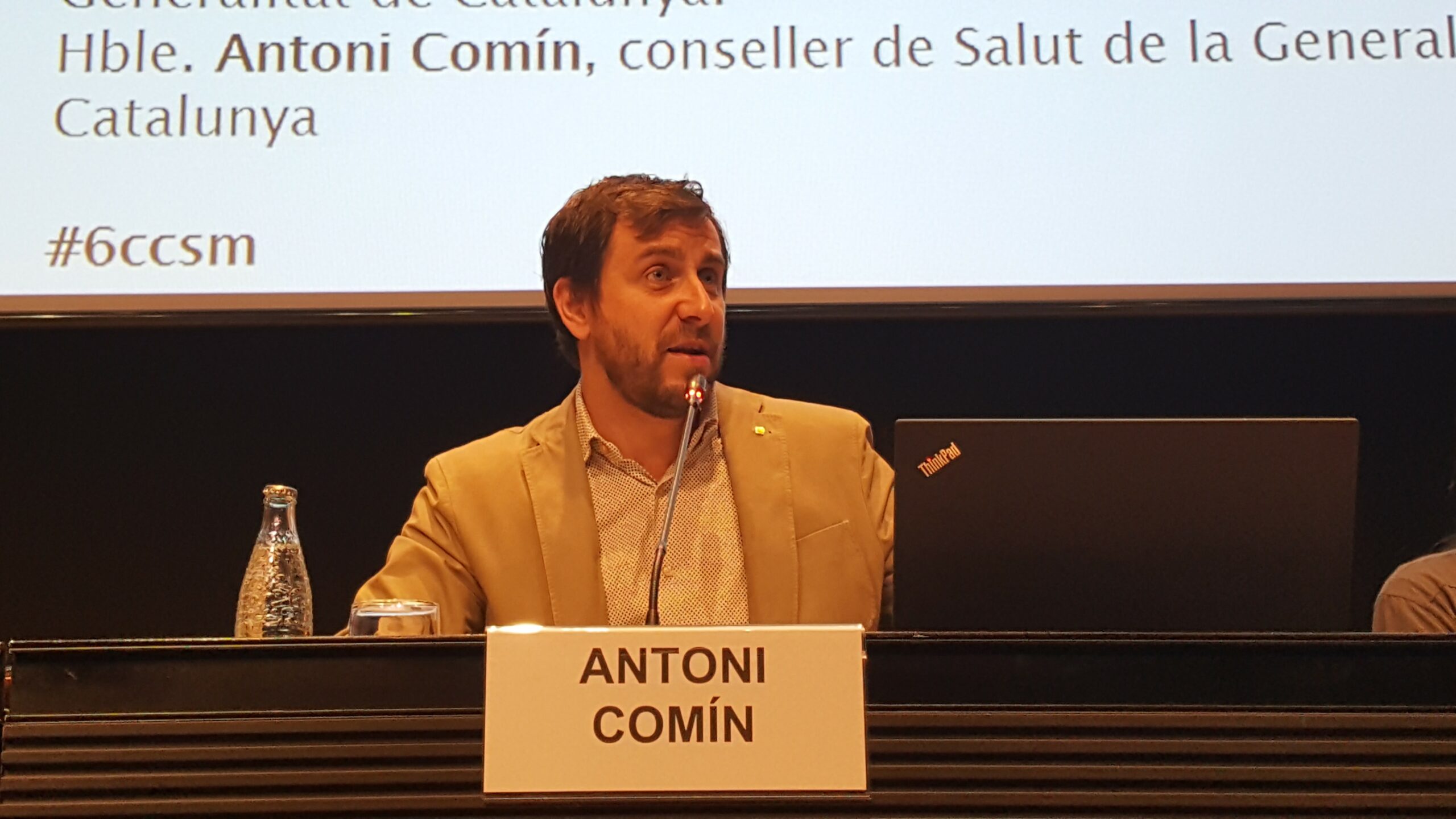
«We will not be a mentally and spiritually healthy society until we treat each other en masse and ordinarily as brothers.» With these words, the Minister of Health of the Generalitat de Catalunya inaugurated this morning, Antoni Comín, the 6th Mental Health Congress: ‘Migrations, Exile, and Refuge: Human Rights and Mental Health’. A fraternity that has also been claimed by the president of the Catalan Mental Health Congress Foundation, Àngels Vives, in his speech, which should guide the approach to migration from the perspective of rights and democratic quality. «We must make citizens,» he stated. Oriol Amorós, Secretary of Equality, Migrations and Citizenship of the Generalitat.
Toni Comín: «We will not be a mentally and spiritually healthy society until we treat each other en masse and ordinarily as brothers.»
Government representatives have highlighted universal healthcare and job placement services provided by the SOC, even to undocumented individuals, as two examples of what Antoni Comín has described as 'Catalonia's exceptionalism in the European context» regarding integration policies. The Commissioner for Health of the Barcelona City Council, Gemma Tarafa, has recalled the existence of the Service for the Care of Immigrants, Emigrants and Refugees for almost three decades and the ‘Barcelona, City of Refuge’ plan since 2015.
The Dean of the College of Social Work of Catalonia, Núria Carrera, has highlighted the professionals' willingness to embrace community action—in the case of social work, "by issuing social prescriptions and accompanying people in their integration"—and has defended denunciation and mobilization "to generate change and ensure everyone's rights." For its part Lluís Noguera, director of CosmoCaixa – the venue hosting the Congress until Saturday, June 3 – has highlighted «the importance of culture, one of the pillars of a welfare society» in the process towards full citizenship for migrants.
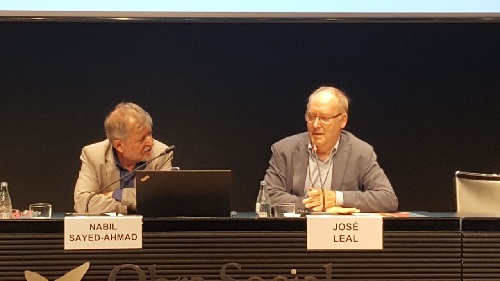
 The report by Nabil Sayed-Ahmad Beirutí, a Syrian-born psychiatrist, has framed the phenomenon of migration as something inherent to human nature and has championed the «myriad positive aspects» it brings: loss of fear of the other, opportunities, knowledge, learning... Sayed-Ahmad has adopted Amin Maalouf's perspective when advocating for talking about origins instead of roots: «people don't have roots, they have feet and they walk.» He has, however, lamented that today's migrations, the forced displacements that risk mental health, are the result of a certain globalization and economic reasons linked to the concentration of wealth.
Congress will feature contributions from numerous professionals and experts from various fields between today and Saturday, including the professor of Moral and Political Philosophy Margarita Boladeras, the philosopher and writer Josep Ramoneda, and the founder and director of the Psychopathological and Psychosocial Care Service for Immigrants and Refugees (SAPPIR) at Sant Pere Claver Hospital in Barcelona, Joseba Achotegui. The objective of the call is to build proposals capable of reducing risks associated with migration and improving coexistence and citizen cohesion, thereby increasing population health and well-being.
Teresa Morandi. Member of the FCCSM Board
The FCCSM Congresses, held every three/four years, are the creative result of participatory processes, reflection, and proposals from individuals across various disciplines. These congresses address topics related to mental health, extending beyond the healthcare aspect to encompass diverse situations experienced by the collective that affect people's subjectivity and social connections. Mental health is viewed as a way of living, of care, autonomous, solidarity-based, and tied to vital, historical, political, and social contexts.
From the Board, at the proposal of then-president Àngels Vives, we chose the theme for the 6th Congress. A very hard and difficult situation was unfolding, presenting us with a duty and a challenge: the different migratory processes that were now dramatically exploding in Europe, causing thousands of people – children, women, men – to arrive in search of refuge. They had lost their homes, forced to flee – risking everything, even their lives – due to multiple adversities caused by wars, climate change, famine, political persecution, etc., which left them destitute, subjected to all kinds of violence, and vulnerable.
As SM professionals, we are regularly faced with the metaphorical act of welcoming “shipwrecks, Beings who suffer, who feel, or who have lost their place in the world, often stigmatized, mistreated, and we seek to give them “asylum,” to house them, opening spaces where subjectivity and speech are present, that is, where subjects are recognized in their humanity and singularity.
Therefore, in the face of “those without shelter,” with the memory of our own exiles, and in the face of the political irresponsibility of states that violate human rights, it was vital for us as humans, professionals, and citizens not to look away or remain in a state of powerlessness. It is an ethical responsibility.
However, we understood that these situations call into question many of the values on which coexistence, respect for human rights, and even the solidarities of individuals and governments are based. Therefore, we had to consider how those who ”knock on the door; Did they know how to accept sharing, cohabiting with others who are seen as different, strange? To consider conflicts and how to face them?
Addressing this social catastrophe within Congress was an opportunity to tackle a complex issue; to confront it through open and supportive reflection, to invite denunciation and debate; to share among different disciplines, various associations, and institutions that were at the forefront of solidarity, and to hear the words, experiences, and creations of many affected individuals.
To consider the different perspectives, three groups worked, focusing their analysis and debates on:
-
- The human rights of migrants: myths and realities.
- The impact of violence on the subject and social bonding.
- Comprehensive care from mental health.
In them, we dedicated time to see and understand, listening to contributions from those who experienced difficulties firsthand, young people, adults, women, and men, as well as from experts and volunteers. We came to learn about various forms of community help, support, and the opening of new tools. We concluded by building some proposals: strengthening levels of welcome and coexistence; alerting to and questioning racism and xenophobia linked to the fear of the other, encouraged by stories from some media outlets and social networks; preventing and reducing risks by caring for the subjective suffering of immigrants, avoiding diagnosing pain and grief as mental illness and medicalizing it.
A manifesto signed by many child rights advocacy groups was drafted.
In line with the themes of the Congress, we remembered the personality and career of two friends and colleagues from the Foundation, both pioneers and examples of good practice in public and community mental health: Josep Clusa, who will be president of the FCCSM, to whom the Memorial of this 6th edition was dedicated, and a tribute to Valentin Barenblit.
The working groups of the 6th Congress
These are the Working Groups que varen participar en aquest 6th Catalan Congress of Mental Health i els eixos sobre els quals varen treballar:
 Starting from the unquestionable defense of Human Rights, the group proposes a reflection on the acceleration of the migratory phenomenon through the analysis of its root causes such as wars, enormous inequalities, and climate change.
The welcoming of emigration, and especially of refugees and children, is a moral duty as well as a challenge that strengthens the good health of society. The political, social, cultural, and religious aspects that influence a good welcome are to be analyzed.
The group also wants to analyze the role of media and social networks in shaping public opinion, and to contrast distorted and alarmist messages with rational analyses and the wide dissemination of solidarity experiences.
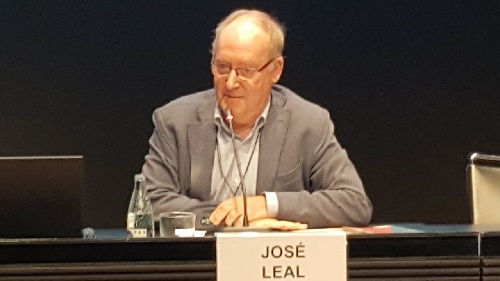
Promoting group: Jose Fernandez, Neri Daurella, José Leal, Càndid Palacin, Albert Mariné, Claudia Vasquez, and Teresa Aragonés.
Coordinators Jose Fernandez and Albert Marine
 Contemporary subjectivity is exposed to various conflicts: climate change; loss of labor guarantees and human rights; terrorism, violent and brutal wars that force exile, to wander the world helpless, traumatized, seeking refuge/asylum that governments deny, while they dedicate themselves to encouraging fear and rejection of “the stranger,” promoting xenophobic and racist attitudes. But, in parallel, a cry of collective solidarity has emerged, a desire to welcome and coexist!
To address these contradictions, which are inevitable in relationships with others, it is essential to consider the psychic-(uni)que dimension of the human being. We must approach it to understand what causes differences and the act of welcoming and coexisting, creating tools to help avoid receiving and perpetrating violence, while caring for Human Rights and Social Mediation.
Promoting group: Carmen Giménez, Gloria Canalda, Joan Fortuny, Joan Lopez, Lluís Isern, Teresa Morandi, Teresa Rossell, Josep Oriol Esteve, Anna Segura, Andrea Latorre, Ligia Arreaga, Daniel Garcia, Lucia Serra and Ester Boixadera
Coordinators Teresa Morandi and Ester Boixadera
Recommended documentation:
 Comprehensive care from mental health starts from the need to recognize the cross-cutting nature of the concept of mental health itself. We understand that mental health care transcends the healthcare network itself (general or specialized) and must be able to recognize the territory, the community as an active agent in processes of growth and health, as well as other formal networks such as social services, education, housing, justice...
We need to share a collective stance on the situation that goes beyond the technical perspective of what we think should be done. A stance as an act of denunciation and revendication. In the face of the lack of political responsibility of states at a time when human rights are clearly being violated.
Our group's work stems from the need to find a space for reflection, review, and generation of proposals related to the mental health care of individuals, families, and groups who have been living in our community for years, coming from other cultures and places around the world. The group raises questions and concerns around topics such as welcoming, specialization in services to assist people from abroad, the functioning of our own service networks, the recognition of self-organization capacity, and experiences of welcoming and support through groups, creative spaces, exchanges, and more.
Promoting group: Àngels Vives, Anna Carrió, Guillermo Mattioli, Isabel Cardenas, Jordi Marfà, Valentin Barenblit, Ada Ruiz, Lluís Albaigès, Pilar Mingo, Silvia Mondón, Gemma Cervera, Begoña Sarrias, Eloisa Fernández, Claudia Erill, Marta Figueras, Claudio Moreno, Núria Vergé, Núria Diez, Laia Martín, Florencia Quercetti, Montserrat Feu, Núria Mata, Yolanda Osorio, and Miriam Pérez.
Coordinators: Anna Carrió and Àngels Vives
Documentation
Below you will find all the documentation collected during the celebration of the 6th CCSM
| Title | Author | Types | hf:doc_tags | hf:document_author |
|---|---|---|---|---|
| What do immigrants dream about?. | Julieta Piastro | 08 Free communication | free-communication | julieta-piastro |
| Inaugural act | Àngels Vives | Inaugural Act | inaugural act | angels-vives |
| Dialogue and art therapy | Amparo del Pino | 08 Free communication | free-communication | Amparo del Pino |
| Human Rights and Mental Health. Realities and experiences from the accompaniment of inmates. | Margarita Garcia O’Meany | 03 Debate Table - Plenary | plenary debate table | Margarita García-Omeany |
| Two readings on the political use of psychiatry in communist Romania | Sergi Solé | 08 Free communication | free-communication | Sergi Solé |
| The immigrant syndrome with chronic and multiple stress - Ulysses syndrome | Joseba Achotegui | 03 Debate Table - Plenary | plenary debate table | Joseba Achotegui |
| Human rights of migrants: myths and realities | GT1 | 07 Summary Document | summary document | GT1 |
| Assessment of functioning in schizophrenia | Karina Campoverde | 06 Posters | posters | karina-campoverde |
| Confronting sexual violence against refugee women | Cristina Fernández Bessa | 03 Debate Table - Plenary | plenary debate table | Cristina Fernandez Bessa |
| Impact and effects of violence on subjectivity and social bonds | GT2 | 07 Summary Document | summary document | gt2 |
| Qualitative research on time use | Ignasi Bros | 06 Posters | posters | Ignasi Bros |
| Comprehensive care for migrants and refugees from a mental health perspective | GT3 | 07 Summary Document | summary document | GT3 |
| The EU refugee “crisis” | Blanca Garcés | 03 Debate Table - Plenary | plenary debate table | Blanca Garces |
| The relationship between solidarity and justice. The different forms of recognition | Margarita Boladeras | 09 Closing Act | closing ceremony | margarita-boladeras |
| Mental health at the crossroads of volunteering and refuge | Núria Pi | 08 Free communication | free-communication | nuria-pi |
| The transformations of clinical practice | Enrico Mora | 06 Posters | posters | enrico-mora |
| Josep Clusa Memorial | Ada Ruiz | 10 Memorial | memorial | Ada Ruiz |
| Josep Clusa Memorial | Teresa Rossell | 10 Memorial | memorial | Teresa Rossell |
| Josep Clusa Memorial | Àngels Vives | 10 Memorial | memorial | angels-vives |
| Migrations, borders, and violation of rights | Àngels Vives | 03 Debate Table - Plenary | plenary debate table | angels-vives |
| Profile of immigrants served in the mental health program | Esther Declares | 06 Posters | posters | Esther declares |
| Migration policies and their impact on people's well-being: a crisis of values? | Nabil Sayed | 02 Conference (opening/closing/other) | opening-conference-closing-others | nabil-sayed |
| Presentation HOMAGE TO VALENTÍN BARENBLIT | Victor Marti | 11 Tribute | tribute | Victor-Marti |
| Presentation HOMAGE TO VALENTÍN BARENBLIT | Teresa Aragonès | 11 Tribute | tribute | Teresa Aragonés |
| Presentation HOMAGE TO VALENTÍN BARENBLIT | Victor Korman | 11 Tribute | tribute | Victor Korman |
| Presentation HOMAGE TO VALENTÍN BARENBLIT | Diana Barenblit | 11 Tribute | tribute | diana-barenblit |
| Presentation HOMAGE TO VALENTÍN BARENBLIT | Fernando Lacasa | 11 Tribute | tribute | fernando-lacasa |
| Presentation HOMAGE TO VALENTÍN BARENBLIT | Valentín Barenblit | 11 Tribute | tribute | Valentin Barenblit |
| Presentation HOMAGE TO VALENTÍN BARENBLIT | Begoña Olabarria | 11 Tribute | tribute | Begona-Olavarria |
| Mentoring projects with unaccompanied migrant and refugee youth | GT3, Mercè Garet | 14 Chronicle/Report/Summary | chronicle-report-summary | Mercedes-AMG GT3 |
| PROFESSIONAL AND EXPERIENTIAL REALITIES SURROUNDING WELCOME EXPERIENCES | Charity Villar | 03 Debate Table - Plenary | plenary debate table | charity-villar |
| SUMMARY OF PROFESSIONAL AND EXPERIENTIAL REALITIES SURROUNDING WELCOME EXPERIENCES | Charity Villar | 03 Debate Table - Plenary | plenary debate table | charity-villar |
| MONITORING OF INITIATIVES AND FCCSM WORKING GROUP BETWEEN CONGRESSES | Dolors Muñoz, Thinkers Group | 03 Debate Table - Plenary | plenary debate table | Dolors Muñoz Group of Thinkers |
| MONITORING OF INITIATIVES AND FCCSM WORKING GROUP BETWEEN CONGRESSES | Lara Diez, Exchange and Production Group | 03 Debate Table - Plenary | plenary debate table | lara-diez group-exchange-and-processing |
| MONITORING OF INITIATIVES AND FCCSM WORKING GROUP BETWEEN CONGRESSES | Dolors Muñoz, Thinkers Group | 03 Debate Table - Plenary | plenary debate table | Dolors Muñoz Group of Thinkers |
| MONITORING OF INITIATIVES AND FCCSM WORKING GROUP BETWEEN CONGRESSES | Lluís Isern | 03 Debate Table - Plenary | plenary debate table | Lluis-Isern |
| MONITORING OF INITIATIVES AND FCCSM WORKING GROUP BETWEEN CONGRESSES | Myriam Garcia, Community Mental Health Group | 03 Debate Table - Plenary | plenary debate table | myriam-garcia community-mental-health-group |
| Life skills workshop for young immigrants | Lucia Cellerino | 08 Free communication | free-communication | lucia-cellerino |
| TRENCADIS WORKSHOP. Proposals for the promotion of mental health through the word (WG3) | GT3, Marta Salvany | 14 Chronicle/Report/Summary | chronicle-report-summary | GT3 Marta-Salvany |
| TRENCADIS WORKSHOP. Proposals for the promotion of MS from different languages (WG3) | GT3, Barriss Offee | 14 Chronicle/Report/Summary | chronicle-report-summary | gt3 9barris-acull |
Organize



Collaborate:






With the support:
Atlantis Association, Professionals for Interculturality
Catalan Association of Mental Health Professionals (ACPSM) – AEN Catalonia
Association of Catalan Democratic Jurists
Exile Association
Barcelona Mental Health
Red Cross Catalonia
Federation Voices. Catalan Mental Health Organizations in the First Person
iPsi Mental Health Care, Teaching, and Research Center
iPsi Psychoanalytic Training
Proactiva Open Arms
Radio Nikosia
Save the Children Catalonia
Psychopathological and Psychosocial Care Service for Immigrants and Refugees (SAPPIR)
SOS Racism Catalonia
UNICEF Catalonia